Full course
System Design Interviews for Backend Engineers
Learn a repeatable framework for turning ambiguous prompts into clear backend architectures—and defending every major trade-off with confidence.
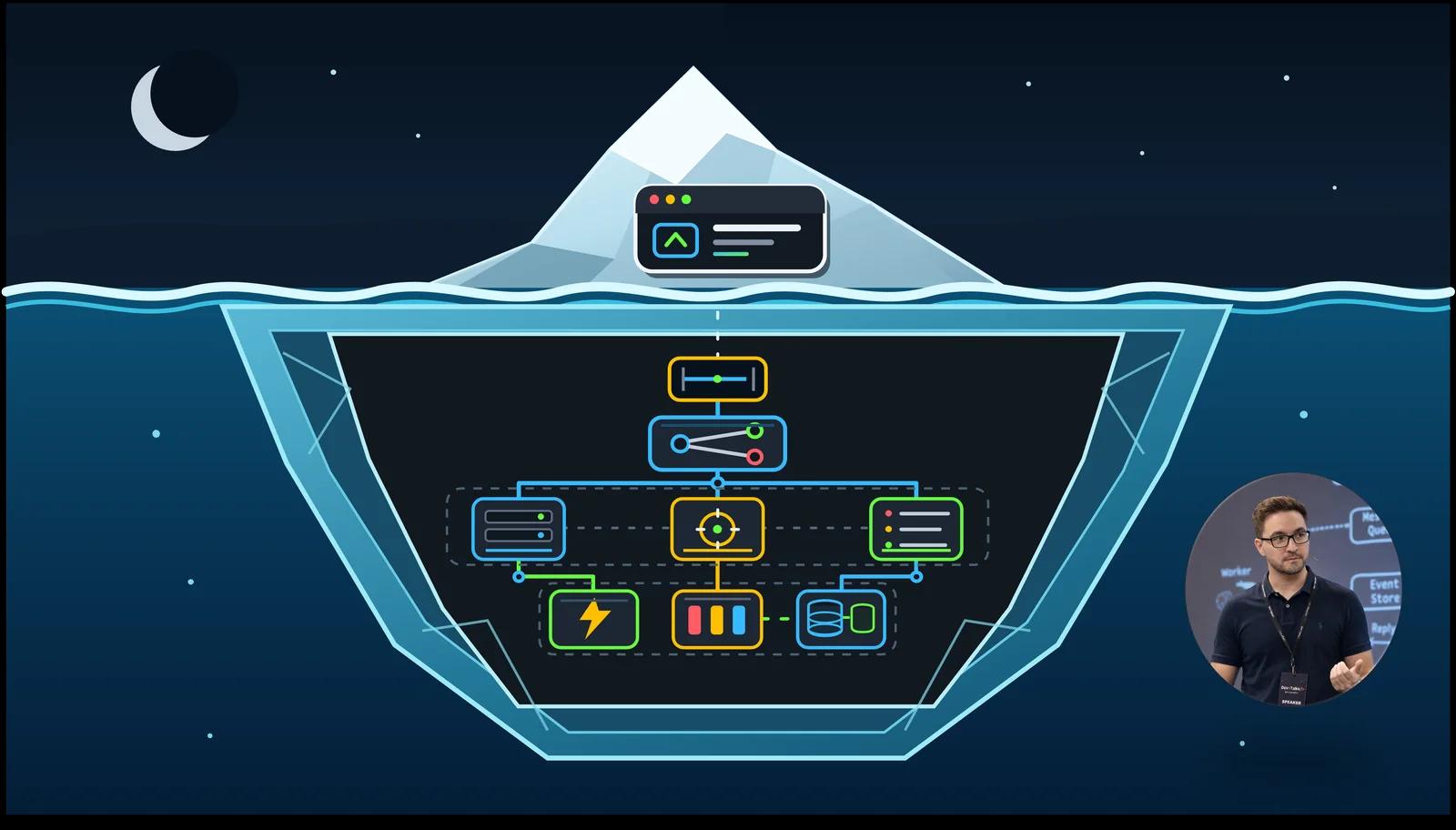
Watch the course preview · 2:08 · English captions
I'm a PM for a fintech firm. This video is brilliant!! There were so many edge cases that you laid out very well and also explained industry standard solutions. Also, you've structured the video really well. Top class!!! Would've loved if you included DB design as well, but that'd probably be me asking for too much. Thanks again.

Learn more
Course Overview
Picture this: the interviewer says, “Design a payment system,” then waits. You know what a load balancer does. You know when a cache might help. You have seen plenty of architecture diagrams. But which question should you ask first—and how do you turn the answer into a design you can defend?
That gap between knowing the components and leading the conversation is where many otherwise strong backend engineers get stuck.
If you do not have a process, a few predictable things happen:
You start drawing too early
You sketch the usual boxes before clarifying the users, requirements or scale—and end up solving the wrong problem.
Your decisions sound arbitrary
Kafka, Redis and microservices sound impressive until the interviewer asks why this system actually needs them.
You lose the thread
The diagram grows, follow-up questions arrive and the design turns into a collection of disconnected decisions.
You run out of time
You spend too long on one component and never reach bottlenecks, failure modes or the trade-offs that matter.
You do not need to memorize more finished diagrams. You need a reliable way to make the next decision, explain why it fits, and adjust when the interviewer changes the problem.
Now, imagine…
- Turn an ambiguous prompt into a clear plan before you draw the architecture.
- Estimate scale and choose components for reasons you can explain out loud.
- Discuss trade-offs without pretending that one perfect design exists.
- Keep the conversation moving while responding to the interviewer’s questions.
I created this course to help you practise exactly that: not the perfect diagram, but the reasoning that gets you from an ambiguous prompt to a clear backend architecture.
Introducing
System Design Interviews for Backend Engineers
YouTube videos can explain individual ideas. This course connects them into one path you can follow from the first requirement to the final trade-off.
Frame the problem
Clarify the product, define requirements, estimate scale and agree on scope.
- Requirements
- Capacity estimates
- APIs and data model
Build the architecture
Move from a simple end-to-end flow to a design that handles the most important constraints.
- Core flow
- Storage
- Caching and asynchronous work
Defend the trade-offs
Find bottlenecks, discuss failure modes and explain how the design evolves.
- Failure modes
- Bottlenecks
- Follow-up questions
You could collect many of these topics from articles and standalone videos. The hard part is understanding how they fit into the same interview. I built the course to make those connections explicit, so you can spend your preparation time practising rather than assembling a curriculum from scratch.
The course method
One framework for the entire interview
BACKEND is the checklist I use to keep a system design conversation moving. It starts before the first box is drawn and ends only when every important decision can be explained.
Architecture blueprint | v1.0
Seven decisions. One defensible design.
- B
01
Bound the problem
Define the scope and state what you will not design.
- A
02
Align on requirements
Confirm the core flows, priorities and success criteria.
- C
03
Calculate scale
Estimate only the numbers that can change the design.
- K
04
Keep the first design simple
Draw one complete flow before adding complexity.
- E
05
Examine bottlenecks
Follow the busiest path and find where it breaks.
- N
06
Neutralize failures
Add resilience, recovery and observability deliberately.
- D
07
Defend every decision
Explain the reason, alternative and trade-off behind it.
</>No box without a reason.
Steps 01–07 | Flow: left → right
Course curriculum
What’s Inside
- 148 Concise Lessons
- Quizzes & Checklists
- Cheat Sheets & Resources
- Premium Support
Try six complete lessons before you decide.
The preview covers the framework, APIs, security, data and traffic.
Is it right for you?
Who is this course for?
This course is for backend engineers who understand the common building blocks, but want a better way to connect them during an interview. It assumes basic backend development knowledge; it does not teach programming fundamentals.
- You want to stop memorizing diagrams and start reasoning from requirements.
- You can name the common components, but want to explain why each one belongs.
- You want realistic case studies without turning preparation into a second job.
- You want a process you can reuse when the interview prompt changes.

Your instructor
Hello, I’m Lucian.
I have spent more than 14 years building software and have taught over 20,000 students. My goal here is not to give you a diagram to copy. It is to show the reasoning behind the decisions, including the places where more than one answer can be correct.
More about Lucian →- 20K+
- Students taught
- 60K+
- YouTube subscribers
- 14+ years
- Professional experience
- 7
- Courses created
Pricing and access
Choose the product that matches your preparation
The course is a one-time purchase. The Question Library remains a subscription, while the Pack combines both products.
Practice
Interview Question Library
Find your knowledge gaps through focused interview practice.
$12 monthly available
- Full interview question library and answers
- Progress and flags across every topic
- New questions added over time
- First 5 questions in every topic are free
Cancel your subscription at any time.
Learn
System Design Course
Use a practical process to design and defend systems with confidence.
Lifetime access
- Complete video course with English subtitles
- Practical step-by-step interview framework
- Progress tracking and resume
- 6 complete preview lessons
15-day refund policy.
Best ValueLearn + Practice
System Design Interview Pack
Combine the complete course with focused interview practice.
Course lifetime access + 12 months of practice
- Everything in the System Design Course
- 12 months of Question Library access
- Lifetime access to the complete course
- All free previews included
15-day refund policy.
Complete System Design course · lifetime access
One-time payment · 15-day refund policy · Stripe checkout · English subtitles
Buy with confidence
15-day money-back guarantee
Preview six lessons before you buy. If you enroll and decide the full course is not the right fit, contact support within 15 days and we will issue a full refund.
What viewers say
Feedback on the lessons behind this course
These are real comments on the REST API and payment system lessons included in this learning path.
You're amazing bro, thank you so much for making these videos! I'm preparing for a senior engineering interview and haven't been feeling very confident about it. Your videos are really helping me build a framework for understanding things at a more high level. I appreciate your effort. Thanks again!

Thank you so much for the effort you put into this video! Your explanation is incredible and the graphic is easy to understand 😊. I instantly subscribed.

Best video!! Explained everything I learned in 4 months in 24 mins

This video is very informative, straight to the point and so well done.
At first I was skeptical, but the more I watched, I learned very important patterns for designing a distributed payment system. well done!

Thank you for this video. Any System Designer or a Technical Architect can easily understand the effort and hard work to come up with such presentable content and sharing knowledge.

This was such a good tutorial for someone like me who is new to these concepts…
This is pure ambrosia. Ah, feed me more, feed me more. I'm savoring each video in the playlist, one at a time, to make it last as long as possible.

Crazy good editing and clear explanations ty man

That was amazing. Thank for you helping me in my prep. This should have way more views. That was the perfect level of detail and the diagrams and animations help solidify the detail you provide. Bravo!
One of the best videos on YT for Payment System Design.
I'm so glad I found your video, Thank you!
Not convinced yet? Here are even more testimonials.
FAQ
Frequently Asked Questions
How long is the course?
The course contains approximately four hours of focused video lessons, including the complete Authentication Stack module.
Is this course for beginners?
It assumes basic backend development knowledge. The course focuses on system design reasoning and interview communication rather than programming fundamentals.
Can I try the course before buying it?
Yes. Six complete lessons are available without an account. If you sign in, your progress through those preview lessons is saved.
How will I access the course?
Sign in with your CodeWithLucian account, complete the secure Stripe checkout and open the protected learning area immediately after your payment is confirmed.
Is access included with the Question Library subscription?
No. The first version treats the course as a separate one-time purchase.
What is the refund policy?
The course has a 15-day refund policy. Contact support within 15 days of purchase if it is not the right fit for you.